Time Saver, Work Smarter: Why Learning NotebookLM Will Transform Your Workplace
August 14, 20263/10/2026
An Hour of Masterpieces at the National Gallery, London
During mid September, my final day in London was a whirlwind race against time before heading to Heathrow Airport for my 14-hour flight back to Singapore. Despite the tight schedule, there was one place I simply could not miss: the National Gallery. The best part? Admission to the permanent collection is completely free to the public, making it an absolute treasure for art lovers worldwide.
There were several iconic paintings I had dreamed of seeing with my own eyes for years. However, knowing I had less than an hour inside, I could not afford to get lost. It was the perfect time to let AI step in as my personal curator and route planner.
How AI Saved My 60-Minute Gallery Sprint
To keep things smooth and efficient, I broke my visit down into three simple steps:
-
Top 20 Highlights: I asked AI to generate a curated list of the top 20 must-see masterpieces in the gallery, complete with direct links to the National Gallery Official Collection. The website is incredible because it details the background, dimensions, medium, and exact room location for each artwork.
-
Prioritising the "Must-Sees": With less than an hour on the clock, ruthless prioritisation was key. I filtered the list down to my absolute essentials and added a few nearby gems situated in the very same rooms.
-
The Optimal Room Blueprint: Gemini mapped out a logical room-by-room walking route from start to finish. Instead of wandering aimlessly across the sprawling halls, I walked in with total confidence and purpose.
My Top Priority Wishlist
-
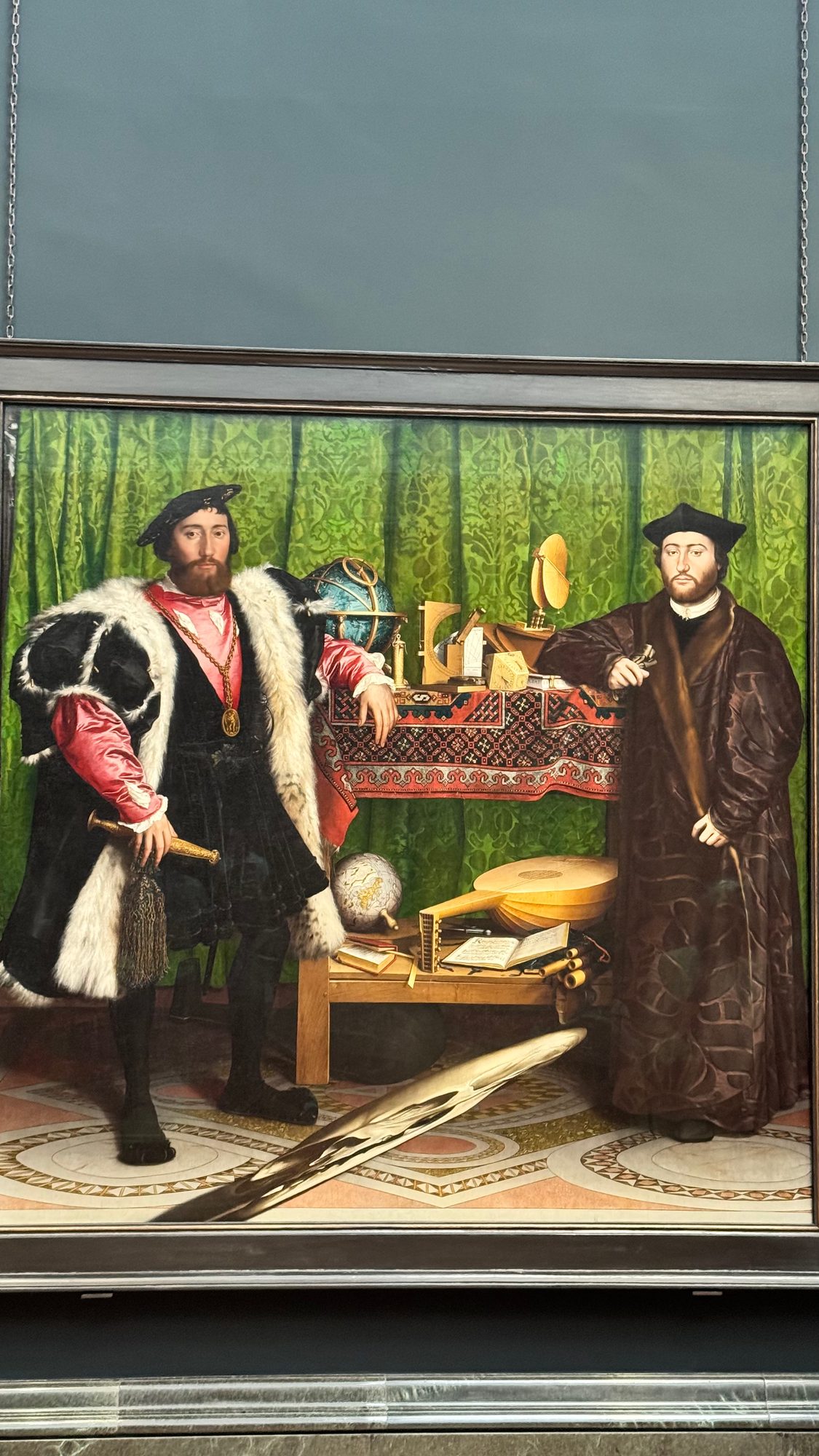
The Ambassadors painted by Hans Holbein the Younger
-
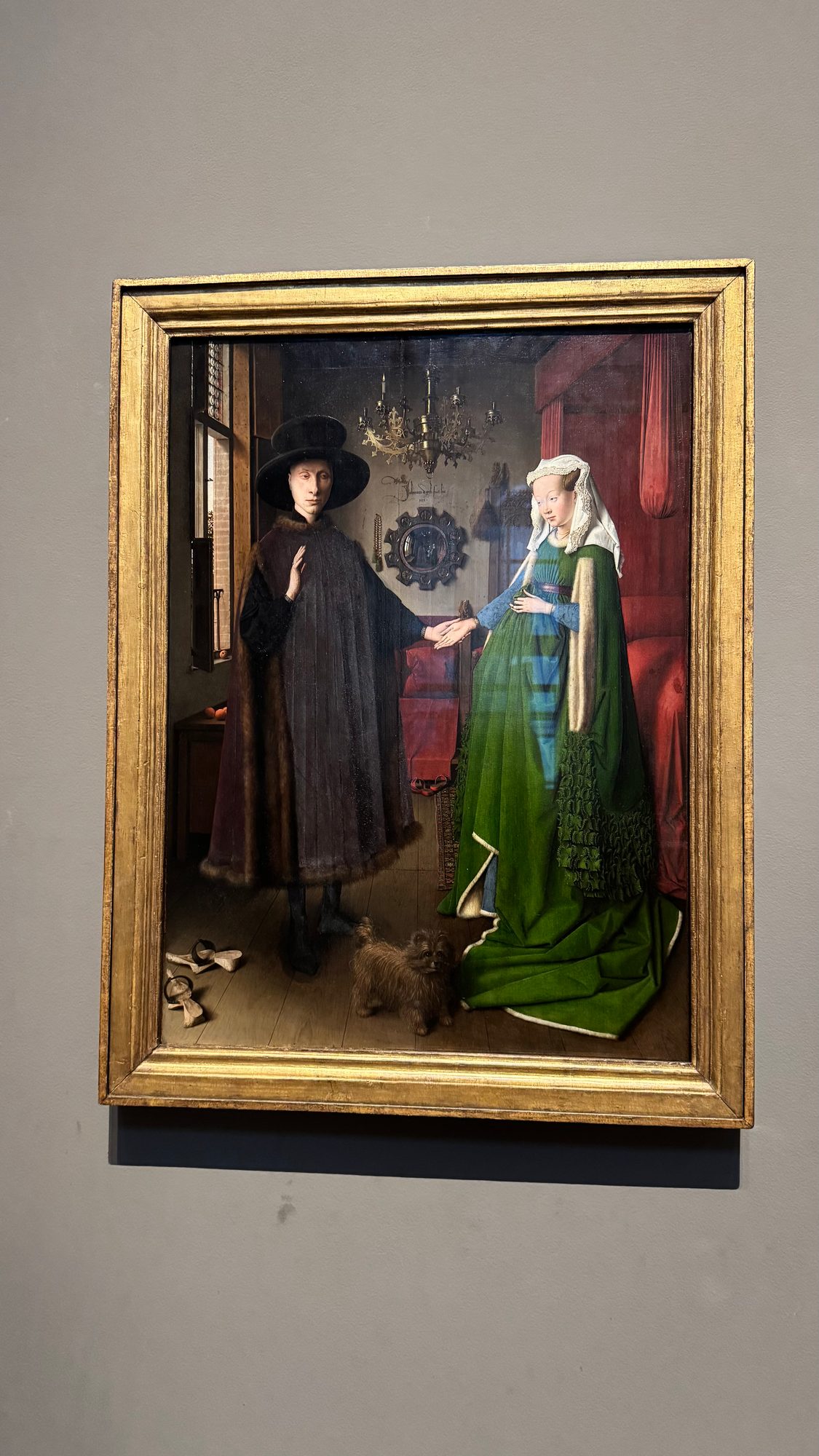
The Arnolfini Portrait painted by Jan van Eyck, which is one of the most intriguing and debated paintings in history
-
The Execution of Lady Jane Grey painted by Paul Delaroche, depicting the tragic Nine Days' Queen
-
The Red Boy (Master Lambton) painted by Sir Thomas Lawrence
-
Portrait of Count Fortunato Martinengo Cesaresco painted by Moretto da Brescia
-
Whistlejacket painted by George Stubbs, known as Britain’s most celebrated equine portrait
-
The Impressionist Masterpieces painted by Claude Monet
-
Post-Impressionism Highlights painted by Vincent van Gogh
Stepping Into History
Following the clear room numbers in the gallery, my journey began in Room 60. The hall was filled with breathtaking art, including Antonio and Piero del Pollaiuolo’s monumental The Martyrdom of Saint Sebastian (completed in 1475), which drew an appreciative crowd.
Soon, I made my way to Room 4 to see the piece sitting at the very top of my list: Hans Holbein the Younger's The Ambassadors.
Seeing this massive panel in person was surreal. What makes it unforgettable is the bizarre, stretched shape floating at the bottom. When viewed straight on, it looks like an abstract blur, but when you step to the far right side, anamorphosis takes over and a 3D human skull suddenly snaps into focus! It serves as a profound memento mori, acting as a sobering reminder that regardless of earthly wealth, scientific genius, and political power, death comes for us all.
The Magic of Van Gogh and Monet
Van Gogh and Monet were the emotional heart of my visit.
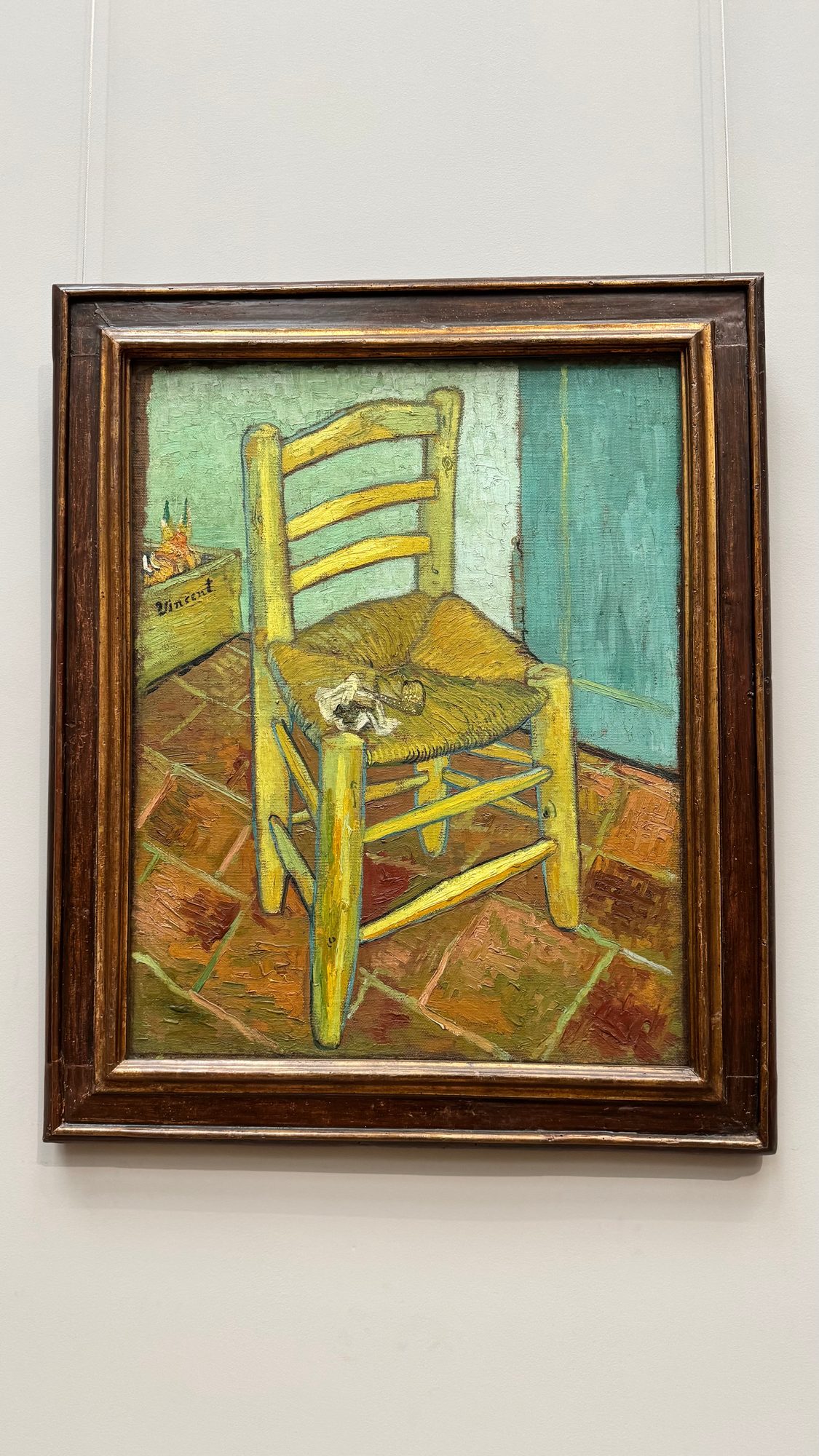
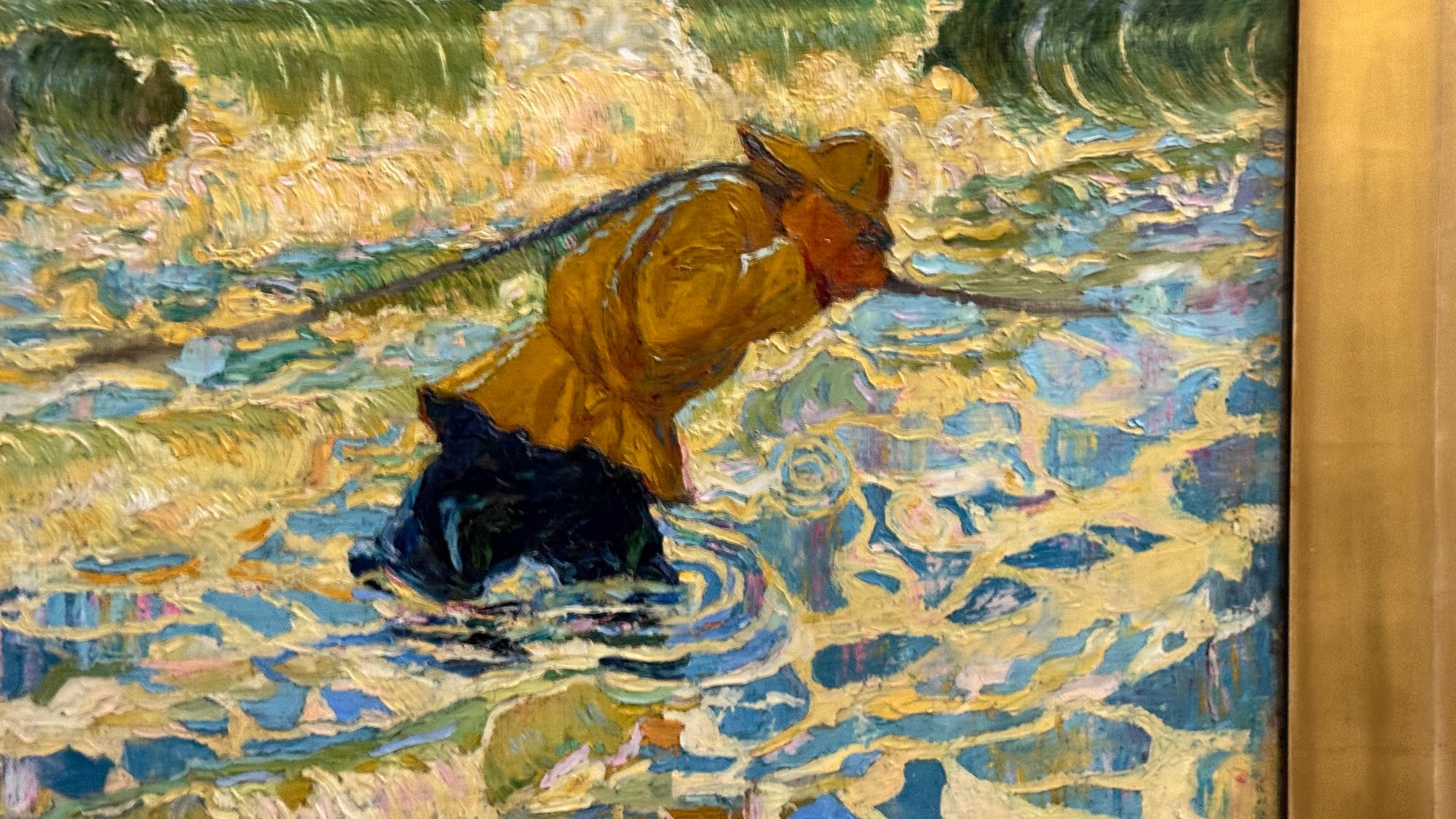
Walking into the Post-Impressionist galleries and being surrounded by Van Gogh’s work gave me chills. While his legendary The Starry Night resides at MoMA in New York, standing face to face with Van Gogh's Chair was mesmerizing. The bold contour lines, the thick, sculptural impasto brushwork, and the luminous rustic yellows showcase his raw genius during his brief, intense six-week collaboration with Paul Gauguin at the Yellow House in Arles.
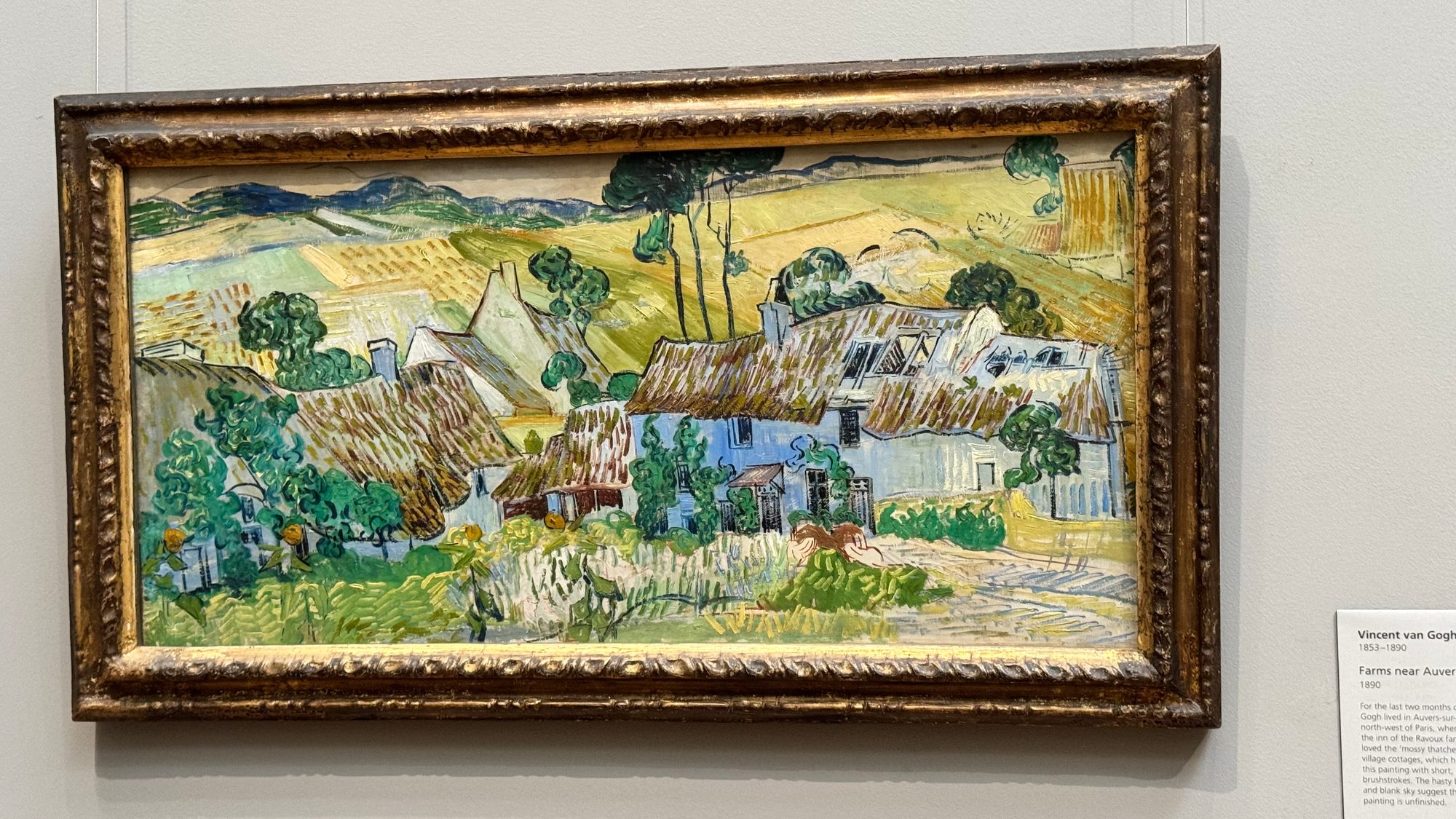
I also lingered over other striking pieces in the room, such as his vivid Two Crabs and serene countryside landscapes.
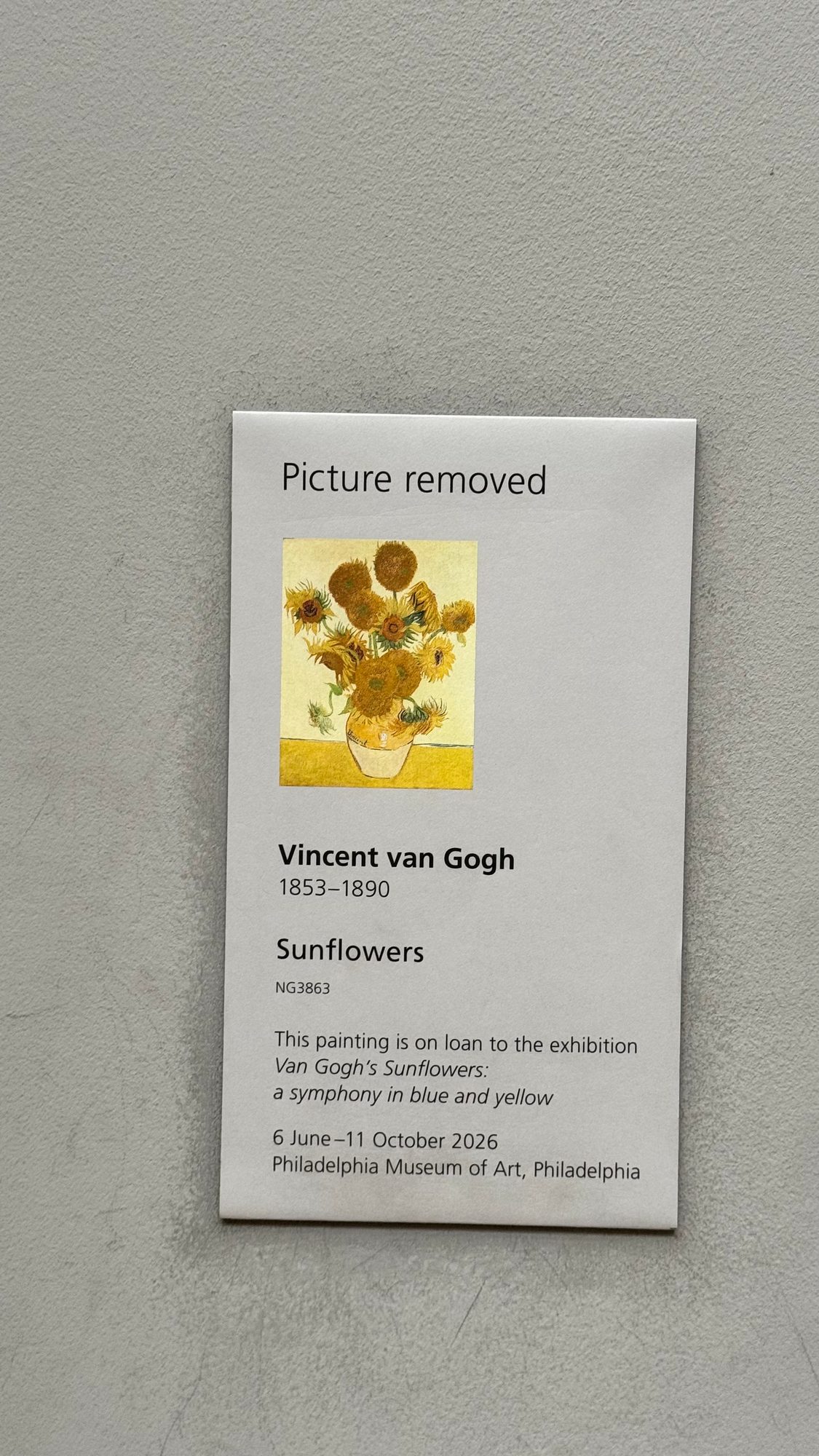
Admittedly, I had one small heartbreak: his famous Sunflowers was not on display, as it was away on loan to the Philadelphia Museum of Art in the United States! Missing it in London felt like a playful trick of fate, so I made sure to pick up a Sunflowers souvenir from the gift shop as a keepsake and a promise that I will see the original in person one day.
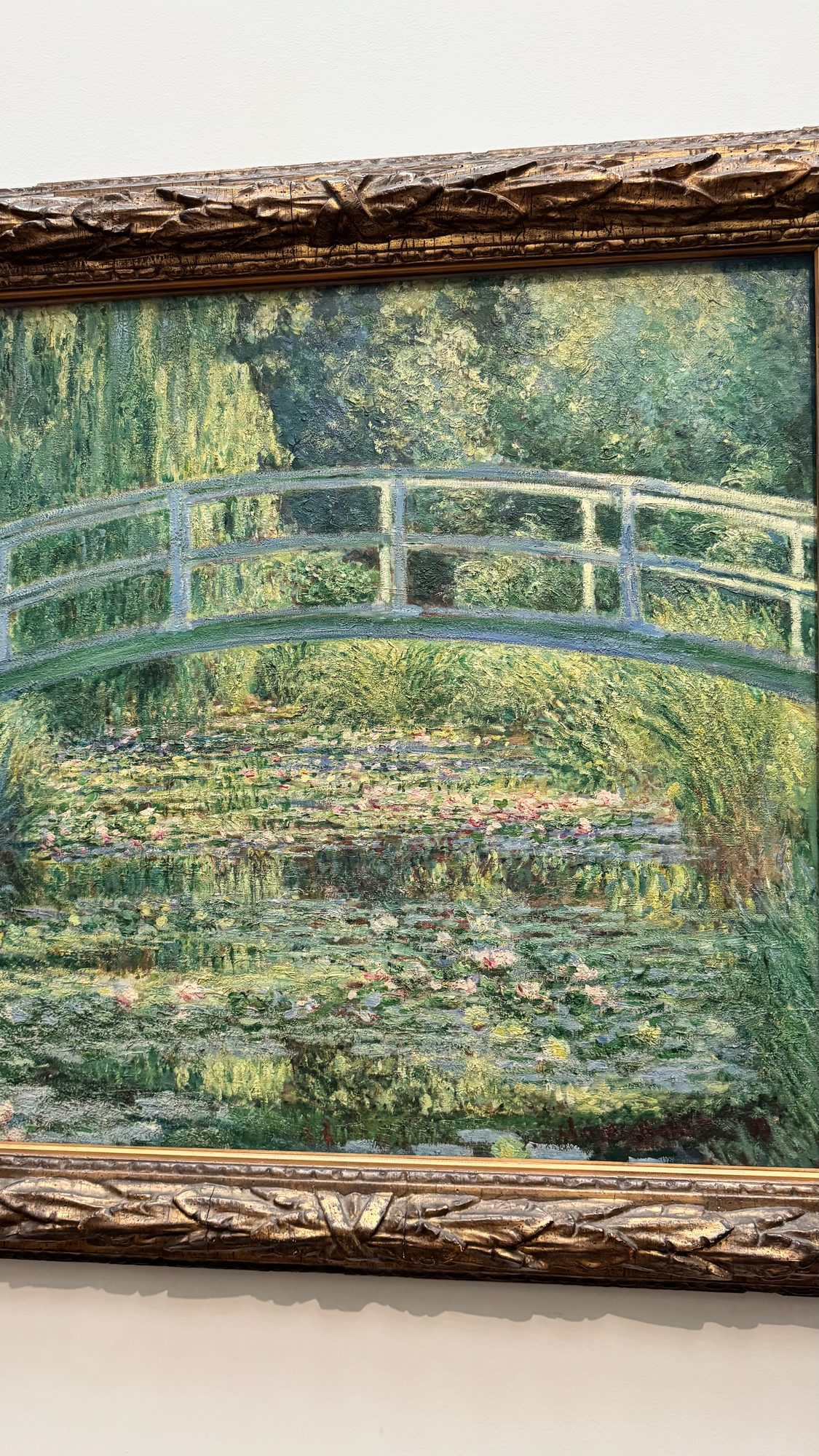
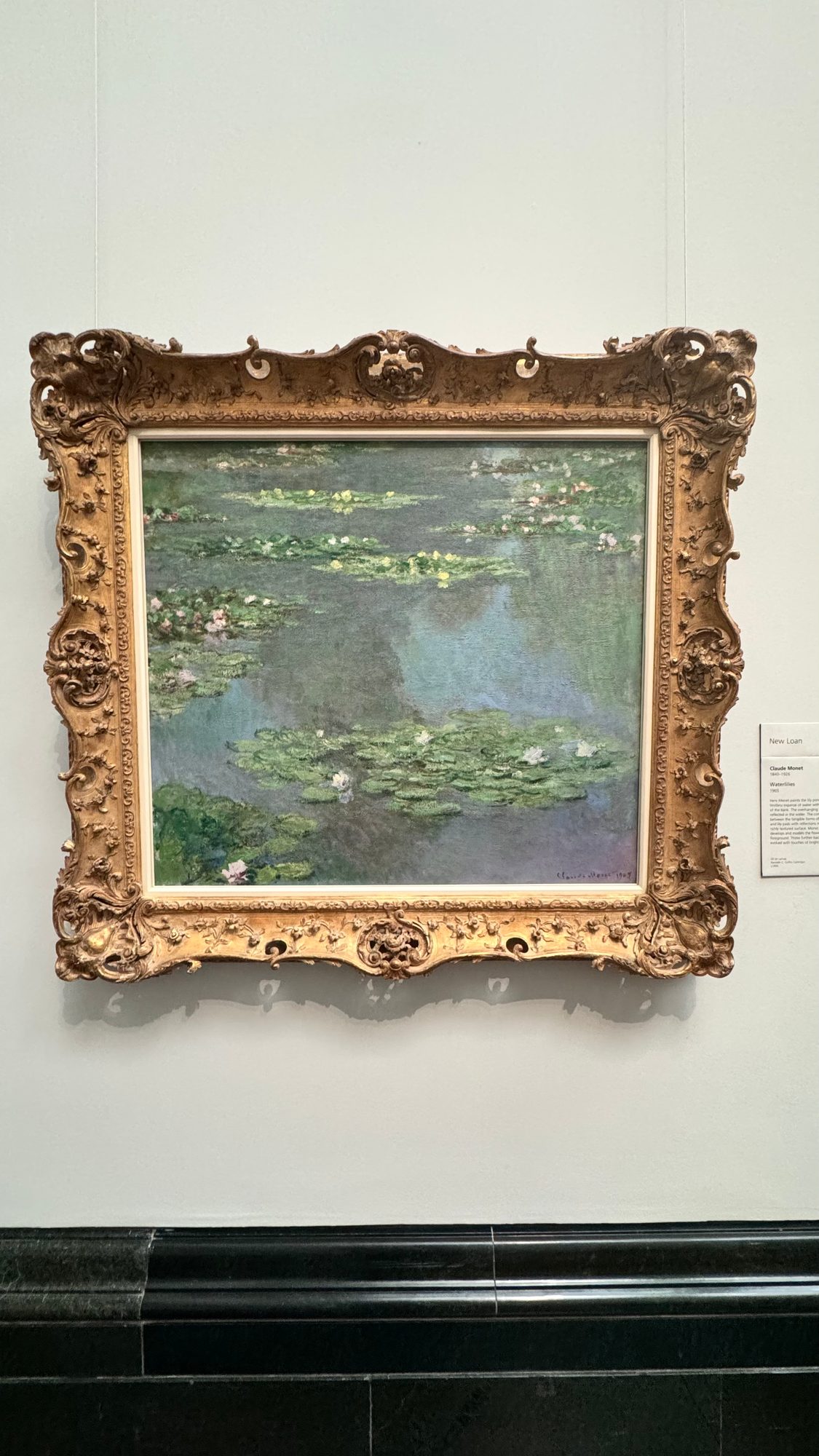
My final stop was Claude Monet, specifically his iconic The Water-Lily Pond (1899). Seeing his Japanese footbridge arching over the blooming water lilies was pure poetry. Up close, you see tiny, dashed brushstrokes and layered flecks of paint; take two steps back, and they seamlessly fuse into a shimmering, tranquil dreamscape.
Parting Thoughts
Lately, diving into art history through Youtube videos and books has become one of my favourite pastimes. Yet, nothing compares to standing inches away from the genuine canvas, where every brushstroke carries the hand and soul of the artist.